
Sumber: antaranews.com
Behind The Policy Clause: How the Good Faith Doctrine Became the Ultimate Weapon for Voiding Insurance Claims
Behind The Policy Clause: How the Good Faith Doctrine Became the Ultimate Weapon for Voiding Insurance Claims
When an insurer refuses to pay a claim despite full premium payment, who is really upholding the principle of good faith?
Faculty of Law, President University
Kunci Hukum | July 9, 2026
Imagine that you have paid insurance premiums with discipline for years, fulfilled all the obligations in the policy, and believed that protection would be there when needed, but when a claim was filed, the insurer rejected it without providing adequate certainty. For the Sarengat family, the experience was not just a disappointment but a test of the trust they had built as policyholders. In order to fight for the rights they believe in, they took the legal route until the dispute ended in the Supreme Court.
What Is Utmost Good Faith and Who Does It Actually Bind?
In the insurance agreement itself, the Utmost good faith or good faith is one of the principles that has been the main foundation since the beginning of the agreement. Simply put, this principle requires both parties to be honest with each other, open, and not hide important information that can affect the insurance agreement. Many people think that this obligation only applies to prospective insureds or policy holders. In fact, the principle of utmost good faith applies reciprocally.
In the Commercial Law Code Article 257 and Article 255, an insurance agreement is a consensual agreement with legal force. Therefore, if one of the parties violates the principle of utmost good faith, it means that there will be consequences from the legal side. Where if the customer does not disclose honest information according to the principle of utmost good faith, then the coverage given can be canceled. In addition, the insurance company also has the right to reject the claim submission and not pay the insurance money. This has been regulated in the Civil Code Article 1320 - 1329.
The Sarengat Case: Premiums Paid, Claim Denied
In 2019, Sarengat entered into Credit Financing Agreement No. 8952019103000327 with PT JACCS Mitra Pinasthika Mustika Finance Indonesia (PT JACCS MPMFI) to finance one Mitsubishi FE 75 Super HDX light truck. This financing facility was automatically covered by the Multipurpose Credit Insurance program under Policy Number 19022120000027, issued by PT Asuransi Mitra Pelindung Mustika as the insurer. As a gesture of good faith, the late Sarengat had fulfilled all his legal obligations by paying in full the life insurance premiums required at the beginning of the contract.
Entering the second year of the contract, Sarengat passed away due to complications from diabetes. His wife, Siti Chotimah, filed an insurance claim as his legal heir, submitting all required documents: a letter of inheritance, a family statement, and an official medical record from the treating doctor.
However, PT Asuransi Mitra Pelindung Mustika unilaterally refused to pay out the insurance claim benefits. The insurance company argued that death caused by diabetes is not covered, and used the doctor’s certificate and the family’s statement as a loophole to avoid their obligations. This refusal immediately resulted in the retention of the truck’s vehicle registration certificate (BPKB) by the finance company, and even triggered a threat of repossession of the collateral vehicle due to a perceived default on payments.
Where Did the Good Faith Go?
This is where the legal problem becomes clear: Sarengat had paid his premiums in full, his heirs submitted every document requested, and yet there was no allegation whatsoever that Sarengat had concealed his health condition when applying for the policy, no evidence of deliberate non-disclosure, and no proof of wrongdoing on the policyholder's part.
Yet the insurer rejected the claim anyway using diabetes as the sole justification, which raises a fundamental question: if the policyholder has done everything right and the insurer still refuses to pay simply by pointing to the cause of death without any concrete legal basis, then who is actually violating the principle of good faith and when the only path left for Siti Chotimah and her family was the courtroom, would the law finally give them the answer they deserved?
What This Means for Every Policyholder
The Sarengat case is not an isolated incident. Across Indonesia, insurance claims are rejected on similarly thin grounds far more often than most people realize, and many policyholders who are unaware of their legal rights simply accept the decision and move on.
Most people sign an insurance policy with one simple belief: when the worst happens, they will be protected. But when even a policyholder who has met every obligation can still have their claim denied, one big question remains will the court stand on the side of justice?
The court's answer and what it means for your rights as a policyholder will be discussed in our next article, "The Supreme Court Just Made It Clear: Insurers Can't Reject Claims on a Whim," publishing July 16, 2026, on Kunci Hukum.
Baca Artikel Menarik Lainnya!
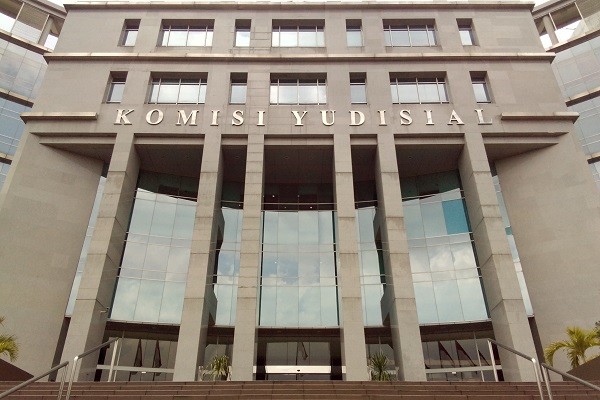
90 Hakim Terbukti Langgar Kode Etik, Komisi Yudisi...
22 June 2026
Waktu Baca: 3 menit
Baca Selengkapnya →
Jakarta Larang Total Perdagangan dan Penjagalan He...
27 November 2025
Waktu Baca: 5 menit
Baca Selengkapnya →
Antara Informasi dan Manipulasi: Bagaimana Cara Me...
03 June 2025
Waktu Baca: 4 menit
Baca Selengkapnya →